Solo Camping Wildlife Safety: Bears, Snakes and Night Visitors
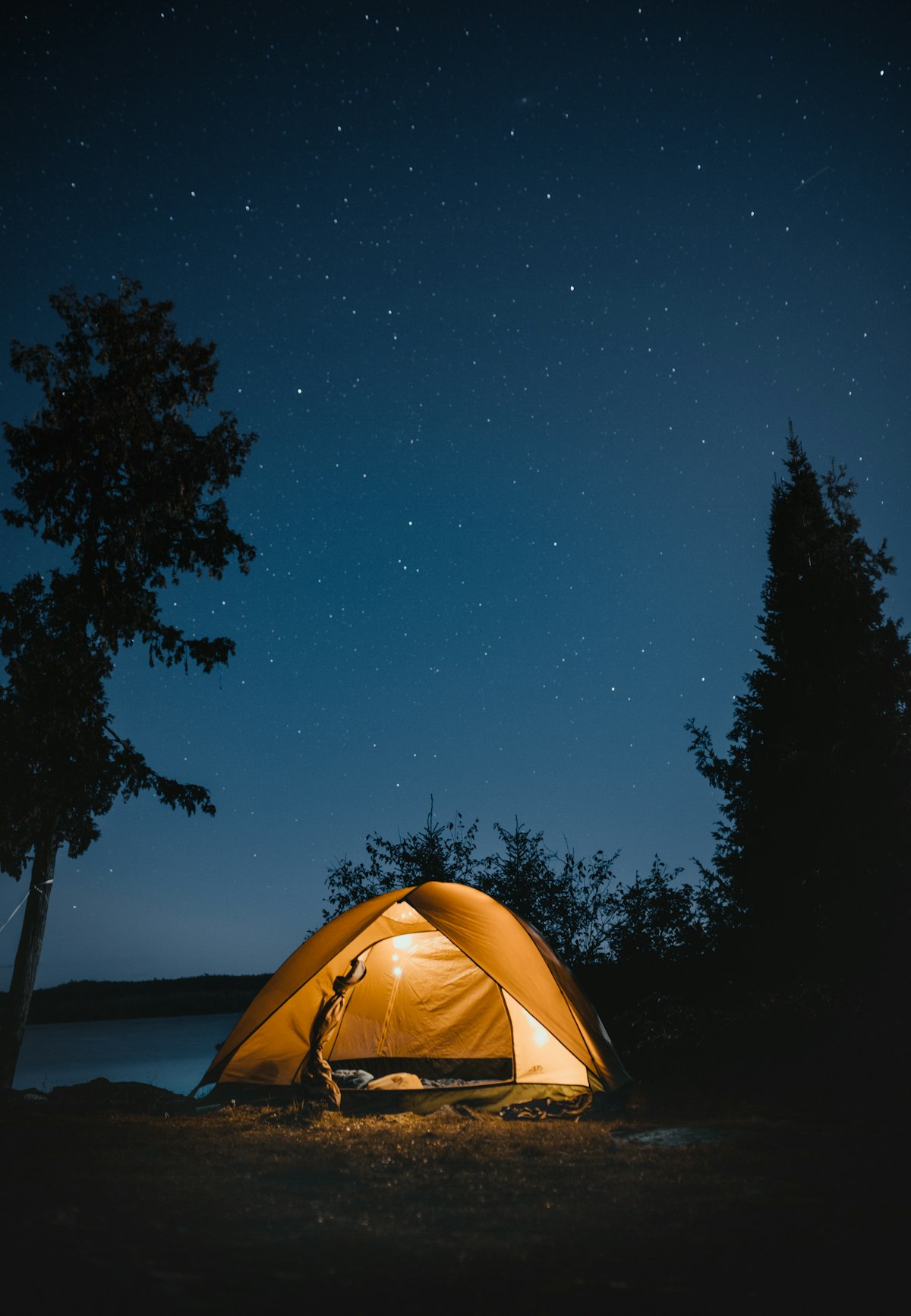
Image source: Unsplash (Free to use)
Solo Camping Wildlife Safety: Bears, Snakes and Night Visitors
The only genuinely frightening wildlife moment I have had solo involved neither a bear nor a snake. It was 2 a.m., something large was moving through my campsite, and I lay in the dark listening to slow deliberate footsteps circle the tent for what felt like ten minutes. My heart was going hard enough that I could feel it. In the morning I found the tracks: a deer.
That night taught me two things. First, that a solo camper's imagination in the dark is far more dangerous to their peace of mind than the local fauna. Second, that I had no actual plan — if it had been a bear, I would have had no idea what to do beyond "be very still and hope."
Wildlife risk in camping is genuinely low and consistently misjudged. People fear the wrong animals and neglect the actual causes of problems. This is the practical version.
Getting the Risk in Perspective
Statistically, the things most likely to hurt you while camping are: driving to the trailhead, falling, hypothermia, dehydration, and — well down the list — animals. Among animals, the ones that cause the most actual incidents are not the ones people fear.
Actual frequency of problems, roughly high to low:
- Rodents and small mammals chewing gear and stealing food
- Insects — ticks in particular
- Habituated animals in busy campgrounds — raccoons, jays, chipmunks
- Ungulates — deer, elk, and especially moose, which injure more people annually than bears in many regions
- Snakes, almost always when someone approaches or handles them
- Bears, of which the vast majority of encounters end with the bear leaving
The single practice that prevents most of this is correct food storage. Not bear spray, not knives, not fires. Food storage.
Food Storage: The Foundation
Every wildlife problem in camp traces back to food. An animal that finds food once returns, brings others, loses its fear of humans, and eventually gets destroyed by wildlife management. The phrase "a fed bear is a dead bear" is not sentimental — it is the outcome.
What Counts as Attractant
More than you think. All of this must be stored:
- All food, including sealed and dehydrated
- All trash and food wrappers
- Toothpaste, soap, sunscreen, lip balm, hand sanitizer
- Cookware and utensils, even washed
- The clothes you cooked in, if anything spilled
- Water bottles that have had flavoured drink in them
- Dog food, which is prime bear bait
Storage Methods
Bear canister. Hard-sided, certified, and the most reliable option. Required in many parks and wilderness areas. Heavy (1–1.5 kg) and bulky, and worth it. Place it 60 m from your tent, on the ground, away from cliffs or water where an animal could roll it somewhere unreachable. Do not hang it or attach anything to it.
Bear hang. Requires skill and a suitable tree, which is often unavailable. Correct specification: at least 4 m off the ground, 2 m from the trunk, and 1.5 m below the branch. Most hangs people make are too low and too close to the trunk, and bears get them routinely. The PCT method — using a carabiner and a stick toggle — is more reliable than a simple counterbalance. Practise at home; doing this for the first time at dusk is unpleasant.
Bear locker. Provided at many established campgrounds. Use them. Close them properly — a latched-but-not-locked locker is an open locker to a raccoon.
Odour-proof bags. Useful as a supplement inside a canister or hang. Not a storage method on their own; a bear's nose defeats them.
The Triangle Layout
Set up three points, each roughly 60 m apart:
- Your tent
- Your cooking area
- Your food storage
This means that if an animal comes for the food, it is nowhere near where you sleep. In bear country this is standard practice and worth following even where it is not required. Cook and eat at the cooking point; never eat in your tent, ever, not even a snack.
Bears
Know Which Species
This matters, because the correct response differs.
Black bears (across most of North America). Usually shy, frequently curious, and very rarely predatory. Most encounters end with the bear leaving on its own. Highly food-motivated and clever.
Grizzly / brown bears (western North America, Alaska, parts of Canada and Eurasia). Larger, more likely to defend territory or cubs, and more likely to charge defensively. Encounters require more caution and this is where bear spray becomes important.
Polar bears. Genuinely predatory toward humans. Requires specialist preparation, firearms in most jurisdictions, and guided travel. Outside the scope of ordinary camping advice.
Avoiding Encounters
- Make noise while moving, especially in dense brush, near streams where sound is masked, and around blind corners. Talking or occasional calls out loud. Bear bells are largely ineffective — human voice carries better.
- Travel in daylight. Bears are most active at dawn and dusk.
- Watch for signs: fresh scat, overturned rocks, claw marks, torn-up logs, carcasses. A carcass means leave the area immediately, in the direction you came from.
- Never approach for a photo. This is the origin of a remarkable number of incidents.
- Camp away from berry patches, salmon streams, and game trails.
If You Encounter a Bear
Stop. Do not run. Running triggers pursuit instinct and you cannot outrun a bear — they exceed 50 km/h.
Make yourself known. Speak firmly and calmly. Let it identify you as human, which is often enough for it to leave.
Make yourself look large. Arms up, stand tall. Do not crouch.
Back away slowly, diagonally if possible, watching the bear. Never turn your back and never break eye contact entirely.
Get bear spray ready — safety off, in hand, not in your pack. Bear spray is the most effective deterrent available and is documented as more effective than firearms at preventing injury. Carry it accessible on your hip or chest strap, know how to use it, and check the expiry date.
If a bear charges: most charges are bluffs that stop short. Hold your ground and deploy spray at roughly 10 m, aiming slightly downward at the bear's face so it moves through the cloud.
If contact happens — and this is where species matters:
- Grizzly / brown bear, defensive attack: play dead. Face down, hands protecting the back of your neck, legs spread to resist being rolled. Stay still until the bear is well away.
- Black bear: fight back. Aim for the face and muzzle. Do not play dead.
- Any bear that enters your tent, or any clearly predatory behaviour: fight back, regardless of species. This is exceptionally rare.
Read that distinction twice and remember it. Applying the wrong response is worse than applying either correctly.
Snakes
Nearly all bites happen when people approach, handle, or try to kill a snake. Leave them alone and the risk drops close to zero.
Prevention:
- Watch where you step and where you put your hands, especially when scrambling or stepping over logs.
- Use a headlamp after dark, always. In hot climates snakes are nocturnal and this is when most encounters happen.
- Do not reach blindly under rocks, into crevices, or into woodpiles.
- Shake out boots and check your tent in snake country.
- Give any snake at least 2 m and walk around it. They cannot strike beyond roughly half their body length.
If bitten by a venomous snake:
- Get away from the snake and stay calm; keep the heart rate down.
- Keep the bitten limb below heart level and immobilize it.
- Remove rings, watches, tight clothing before swelling starts.
- Mark the swelling edge with a pen and note the time, which helps medical staff assess progression.
- Get to hospital. Antivenom is the treatment.
- Do not cut, suck, apply a tourniquet, apply ice, or use electric shock. All of these cause harm and none help.
Solo, this is a situation where a satellite messenger genuinely changes the outcome. If you camp alone in snake country, consider one seriously.
The Animals People Underestimate
Moose
In many regions moose injure more people than bears. They are enormous, poor-sighted, unpredictable, and utterly unafraid. Cows with calves in spring and bulls in autumn rut are the dangerous cases.
Give them 50 m minimum. If a moose lays its ears back, raises its hackles, or licks its lips, it is about to charge — run, and put a large tree between you. This is the one animal where running is the correct response. Unlike bears, a moose is not hunting you; it wants you gone.
Deer and Elk
Generally harmless, but rutting males are genuinely dangerous and habituated animals in campgrounds will approach for food. Never feed them. Elk during rut deserve the same 50 m respect as moose.
Rodents
The most likely animal to actually cost you something. Mice, chipmunks, marmots, and packrats will chew through pack fabric, tent mesh, and food bags — and marmots are notorious for chewing car wiring and hoses at trailheads.
They are also attracted to salt. A sweaty pack strap or shirt is a target.
Defence: store everything in hard containers, hang packs where possible, leave pack pockets open and empty so animals do not need to chew in to check, and never leave food loose in a tent.
Raccoons and Habituated Campground Animals
In busy campgrounds these are the real problem. They are dexterous, fearless, and effective. Latched coolers do not stop a raccoon. Use bear lockers where provided and never leave food out unattended, even for ten minutes.
Sleeping Alone With Wildlife Around
Practical points that address the actual experience — the thing that kept me awake for ten minutes over a deer.
- A clean camp is a quiet camp. If there is nothing to find, animals pass through rather than staying.
- Keep a headlamp and, in bear country, bear spray inside the tent, within reach, in a known spot. Not for use in a panic — for the confidence of knowing they are there.
- Expect noise. Deer, rodents, owls, and wind in vegetation all sound larger at 2 a.m. than they are. Most sounds are small animals.
- Do not exit the tent to investigate every noise. Listen. Voice — talking out loud, firmly — is enough to move almost anything short of a determined bear.
- Never keep food, toothpaste, or scented items in the tent. This is the rule that most directly determines whether something comes to your door.
- Pee away from the tent but within your camp area, not out in the dark.
- Some anxiety is normal solo. It reduces with experience. Knowing you have a correct plan for the realistic scenarios is what actually reduces it, more than any gear.
Region-Specific Homework
Do this before every trip in unfamiliar territory:
- What large animals are present? Bears — which species? Moose? Big cats? Wild boar?
- What are the current local regulations? Canister requirements, food storage rules, and any active closures for animal activity.
- Is bear spray legal and available? It is prohibited in some jurisdictions and unavailable in others.
- Are there recent incident reports? Ranger stations and park sites post these, and they are the best current information available.
- Where is the nearest hospital with antivenom, in snake country?
Ten minutes of reading. It is the highest-value wildlife preparation there is.
Wrapping Up
Wildlife risk while camping is real but small, and it is dominated by the boring end of the spectrum: mice in your pack, ticks on your legs, a raccoon in your food. The dramatic animals mostly want nothing to do with you.
Store food properly using the 60 m triangle. Carry bear spray where relevant and know how to use it. Learn the black bear versus grizzly response difference. Give moose 50 m and run from them if they charge. Never handle a snake. Check for ticks every evening.
And when something circles your tent at 2 a.m., it is almost certainly a deer.