Solo Camping Weather Preparation: Read and Handle Conditions
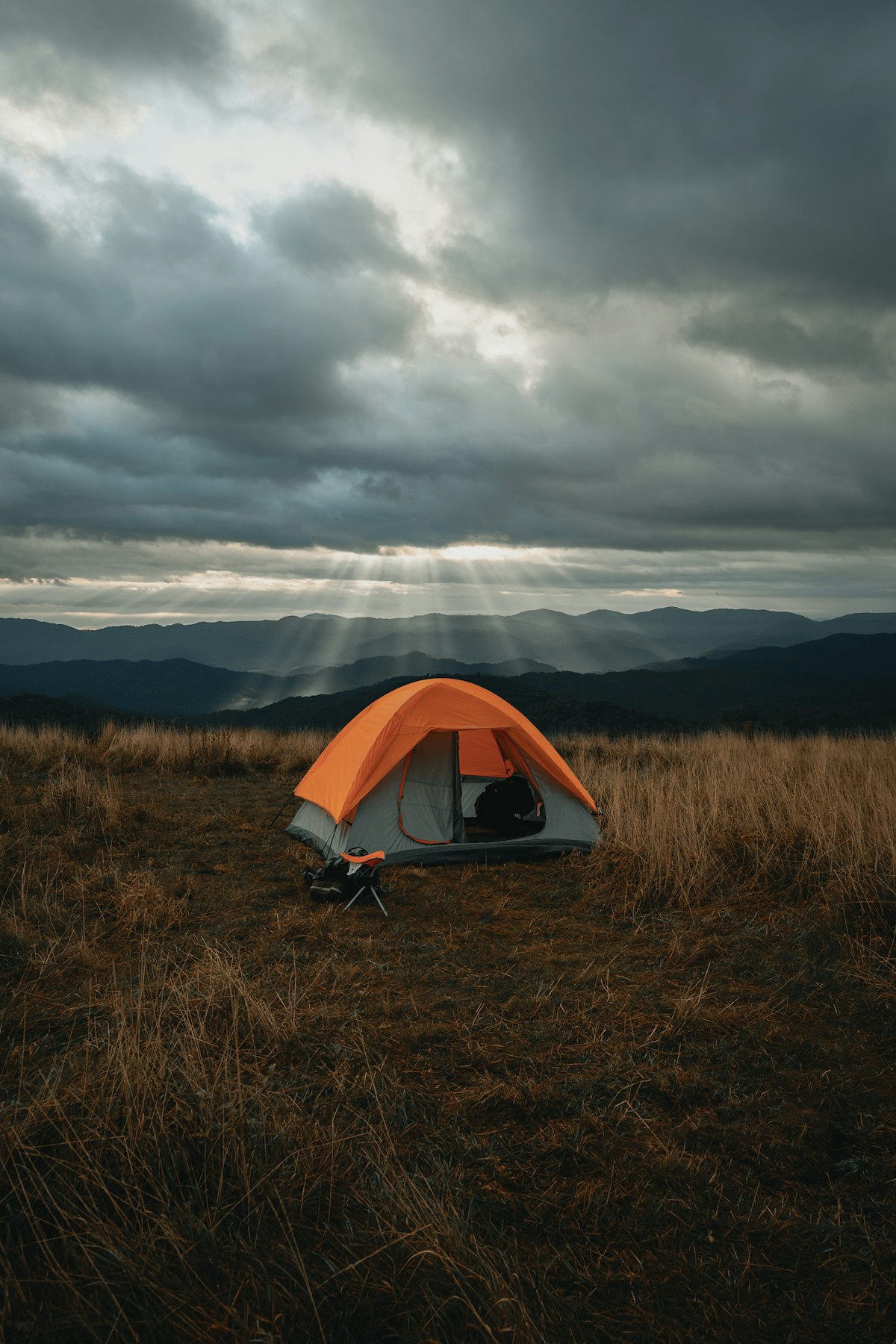
Image source: Unsplash (Free to use)
Solo Camping Weather Preparation: Read and Handle Conditions
The forecast said "20% chance of showers." What arrived was four hours of sustained rain driven by 60 km/h wind, starting at 2 a.m., on an exposed ridge where I had pitched my tent broadside to the weather because the view was good. I spent the night holding a pole from the inside, awake, listening to fabric strain, calculating whether I could walk out in the dark if it tore.
The tent held. My confidence in forecasts did not. What I learned that night was not that forecasts lie — it was that I had read the forecast without understanding it, and pitched my tent without thinking about wind at all.
Weather is the variable most likely to turn a solo trip genuinely dangerous, because alone you have no partner to share a shelter, split gear, or help you make a decision while cold and tired. This guide covers reading conditions before and during a trip, and handling the five weather situations that matter.
Reading a Forecast Properly
What "30% Chance of Rain" Actually Means
It does not mean light rain, and it does not mean rain for 30% of the time. It means: for any given point in the forecast area, there is a 30% probability of measurable precipitation during the period. It says nothing about intensity or duration.
A 30% chance can be a four-hour downpour. Probability and severity are independent, and conflating them is the most common forecast-reading error.
Use Mountain and Point Forecasts, Not City Forecasts
The forecast for the town 30 km away and 900 m lower is close to irrelevant. Mountains generate their own weather. Look for:
- Point forecasts for your specific coordinates and elevation
- Mountain weather services where they exist (many countries have dedicated mountain forecasts)
- Freezing level — critical, and absent from ordinary forecasts. If the freezing level drops below your camp elevation, rain becomes snow and everything changes.
- Wind at elevation, not at valley level. Ridge wind is routinely double valley wind.
The Numbers That Matter Most
- Wind speed and direction. Wind is more dangerous than rain and more likely to damage your shelter. Sustained wind over 40 km/h means rethinking your site; over 60 km/h means rethinking the trip.
- Overnight low, and where it was measured. Temperature drops roughly 6.5°C per 1000 m of elevation. A valley forecast of 8°C means around 2°C at 900 m higher.
- Precipitation type and total, not just probability.
- Cloud base height. A low base means fog on ridges, which is a navigation problem as much as a comfort one.
Check Multiple Sources and Check Late
Read two or three independent forecasts. When they disagree, the uncertainty is real — plan for the worse one. Check again the morning you leave; a 5-day forecast is a rough sketch, a 24-hour forecast is reasonably reliable.
Reading Weather in the Field
Once you lose signal, you are your own forecaster. These signs are genuinely useful.
Clouds
- Cirrus — high, thin, wispy. Often the first sign of an approaching front, 12–36 hours out. Time to plan, not panic.
- Altocumulus in rows or a "mackerel sky" — instability, often precipitation within 12–24 hours.
- Lowering, thickening cloud with a dropping base — a front arriving. Rain is close.
- Lenticular clouds — smooth lens shapes over peaks. Very strong winds aloft. On mountains this is a serious warning.
- Towering cumulus building vertically through the day — convective instability. Afternoon thunderstorms. If you see this by late morning, be off exposed ground by early afternoon.
- Anvil-shaped top — a mature thunderstorm. Act immediately.
Wind and Pressure
- Wind shifting direction steadily usually indicates a front passing.
- Wind dropping to dead calm before a storm is a classic and reliable warning sign.
- A sudden cold gust on a warm day often precedes a thunderstorm downdraft by minutes.
- Falling pressure means deteriorating weather; the faster the fall, the more intense the change. A cheap watch with an altimeter doubles as a barometer — if your altitude reading climbs while you sit still, pressure is falling.
Other Signals
- Smoke rising straight up suggests high pressure and stability. Smoke that hangs low and spreads suggests the opposite.
- Unusually clear, sharp visibility often precedes a front.
- Halo around sun or moon — ice crystals in high cloud, often 12–24 hours before precipitation.
- Sudden temperature inversions and heavy dew usually mean a clear, cold night ahead.
Handling the Five Situations
1. Rain
Rain alone is a comfort problem. Rain plus wind plus cold is how hypothermia happens, and it is the most common serious risk in temperate camping.
Before: Pitch on ground that drains — a slight rise, never a hollow or a dry stream bed. Seam-seal your tent before the season. Waterproof your pack with a liner bag, not just a cover; covers fail in wind. Put your sleeping bag and spare layers in a dry bag. This is non-negotiable on solo trips — a wet sleeping bag alone in cold weather is an emergency.
During: Get the rainfly taut; sagging fabric touches the inner and wicks water through. Keep one set of dry clothes untouched no matter what. Change out of wet layers the moment you stop moving, because you cool fast when you stop. Cook in the vestibule with real ventilation, and never with a stove inside a closed tent — carbon monoxide has killed campers doing exactly this.
Deciding to leave: If your insulation is wet, temperatures are dropping, and rain is not stopping, exit. Alone, there is no margin for waiting it out and being wrong.
2. Wind
Wind is the shelter-killer, and the failure I nearly experienced on that ridge.
Site selection is everything. Pitch behind natural windbreaks — a rock outcrop, a stand of trees, a low rise. Never on an exposed ridge or a col, which funnels and accelerates wind. Never directly under dead or dying trees; falling branches are a leading cause of camping fatalities, and wind is when they fall.
Pitch the narrow, low end into the wind. Broadside is what I did wrong. Use every guy line — all of them, every time, even when it seems unnecessary. Stake at 45 degrees, use rocks to reinforce in loose ground, and re-tension before bed as fabric relaxes.
If wind builds beyond your shelter's limit: drop the tent and use it as a bivouac wrapped around your sleeping bag, in the lee of a rock. A collapsed tent you are inside beats a shredded tent you are not.
3. Lightning
The one weather situation with immediate, lethal risk. There is no gradual escalation.
The 30/30 rule: if the gap between flash and thunder is under 30 seconds, the storm is within about 10 km and you are already in danger. Wait 30 minutes after the last thunder before returning to exposed ground.
Get off summits, ridges, and open ground immediately. Avoid lone trees, water, metal fences, cave entrances, and shallow overhangs.
Seek a stand of uniformly sized shorter trees, or low ground in a broad area — a depression, but not one that floods. A vehicle is genuinely safe; a tent offers no protection whatsoever.
If caught fully exposed: crouch on the balls of your feet, feet together, heels touching, hands over ears, minimizing ground contact. Do not lie flat — ground current is the most common lightning injury mechanism. Put your pack down away from you if it has a metal frame.
Thunderstorms in mountains are strongly diurnal — they build in the afternoon. Start early, be off high ground by 1 p.m. in storm season. This single habit removes most of the risk.
4. Heat
Heat kills more people than cold in many regions, and it is easy to underestimate.
Hike in the early morning and evening; rest 11 a.m. to 4 p.m. Plan water carefully — 4–6 litres per person per day in genuine heat, and verify that water sources actually exist rather than trusting a map symbol from an unknown year. In dry regions, sources marked on maps are frequently seasonal.
Wear loose, light, long-sleeved clothing — more effective than bare skin. Wide-brimmed hat. Sunscreen reapplied.
Recognize the progression: heat exhaustion means heavy sweating, weakness, nausea, cool clammy skin. Stop, shade, cool, drink with electrolytes. Heat stroke means hot dry skin or altered mental state, and it is a medical emergency — cool aggressively and get help immediately. Alone, the frightening part is that confusion arrives before you recognize it. Set an alarm to drink on a schedule rather than trusting thirst.
5. Cold and Sudden Temperature Drops
The dangerous cold is rarely deep winter cold you prepared for. It is 5°C with rain and wind in September when you brought a summer bag.
Know hypothermia's early signs, because alone nobody will spot them for you: shivering, clumsiness, slurred speech, stumbling, and — critically — poor judgment and apathy. The "umbles." If you notice yourself making bad decisions or not caring, treat it as an emergency.
Act early: get out of wind, get into dry insulation, eat sugar and fat, drink something warm, get into your sleeping bag with a hot bottle. Do not "walk it off."
Prepare: always carry one more insulating layer than the forecast justifies, plus an emergency bivvy bag (100 g, costs very little, has saved lives). Keep chemical hand warmers in the first aid kit.
The Solo Decision Framework
Alone, you cannot outsource judgment. I use three rules:
Set turnaround conditions before you leave, written down. "If wind exceeds X, I camp low." "If it is still raining at 9 a.m., I walk out." Deciding in advance, warm and dry, produces better decisions than deciding cold and tired.
Halve your tolerance. Whatever conditions you would accept with a partner, accept less alone. There is no second shelter, no shared body heat, no one to fetch help.
Bail early and without ego. The most experienced solo campers I know are the quickest to turn around. A cancelled trip costs a weekend. Every trailhead is still there next month.
Wrapping Up
That night on the ridge, the tent held because it was a good tent, not because I had made good decisions. I had read a percentage without understanding it, ignored wind entirely, and chosen a site for the view.
Read wind and freezing level, not just rain probability. Pitch behind a windbreak with the low end into the weather, and use every guy line. Watch cumulus build in the morning and be off high ground by early afternoon. Keep one set of dry clothes that never gets used for anything else. Write your turnaround conditions down before you leave.
Weather does not care that you are experienced. It only responds to preparation.