Solo Camping Mental Health Benefits: Solitude That Restores
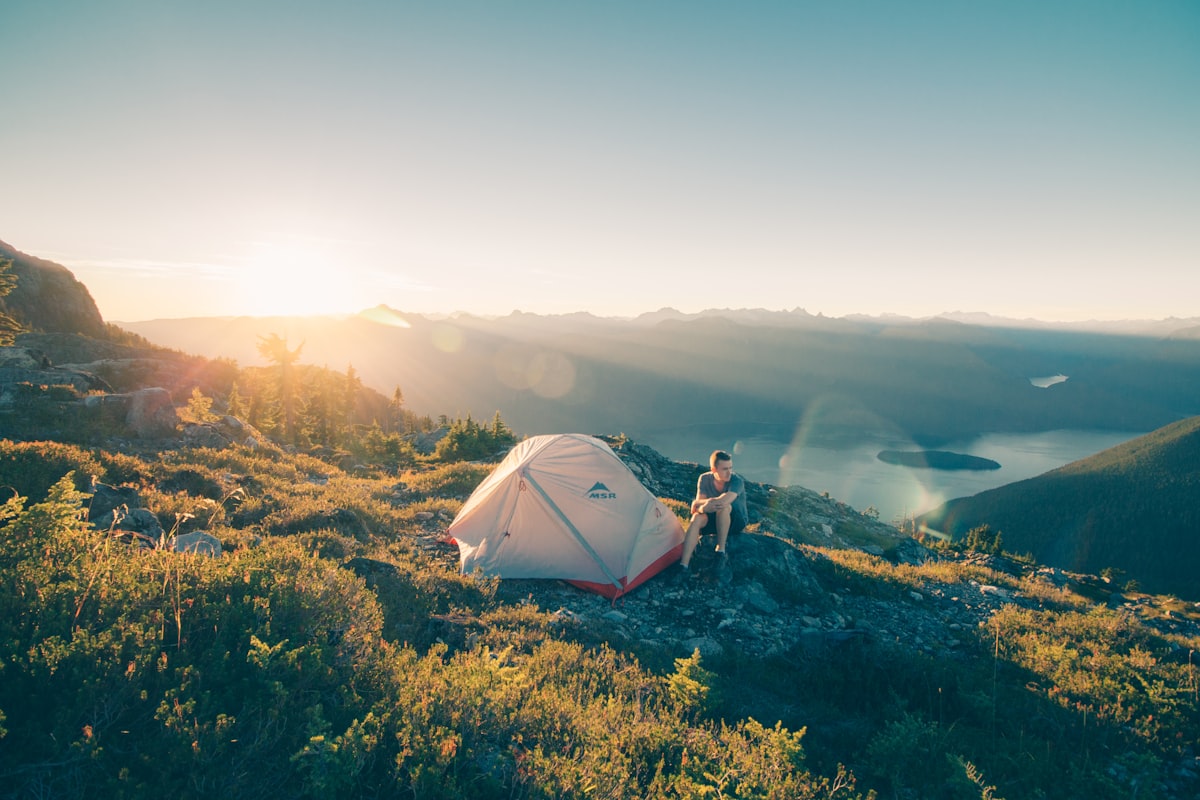
Image source: Unsplash (Free to use)
Solo Camping Mental Health Benefits: Solitude That Restores
I started camping alone for bad reasons. I was burnt out, avoiding people, and I told myself I wanted "space to think." What I actually did on that first trip was sit in a tent for two days doom-scrolling on the one bar of signal I could find, and come home more tired than when I left.
The second attempt, six months later, I left the phone in the car. That trip did something the first one had not, and it took me a while to understand why. The difference was not the location or the weather. It was that I had stopped bringing the thing I was supposedly escaping.
Solo camping has genuine, measurable mental health benefits. It is also easy to do in a way that delivers almost none of them. This is about the difference.
What the Research Actually Shows
There is more evidence here than you might expect, and it is worth separating from wellness marketing.
Time in nature reduces measured stress markers. Studies have repeatedly found lower cortisol, reduced blood pressure, and lower heart rate after time in natural environments compared with urban ones. The commonly cited threshold is around 120 minutes per week in nature for a measurable wellbeing effect — a modest bar that a single overnight trip clears easily.
Attention Restoration Theory proposes that natural environments engage what researchers call "soft fascination" — a stream, moving leaves, a fire — which holds attention gently without demanding it. This allows the directed-attention system, the one exhausted by work and screens, to recover. Urban environments demand constant directed attention. This is why a walk in a forest feels different from a walk down a busy street, even at the same pace and duration.
Rumination decreases. One frequently cited study found that a 90-minute walk in a natural setting reduced both self-reported rumination and neural activity in the subgenual prefrontal cortex, a region associated with repetitive negative thought. A matched urban walk did not.
Sleep improves through light exposure. A few days without artificial light and screens shifts circadian rhythm earlier and increases melatonin onset. Research on camping trips has found participants' internal clocks resetting substantially within a week — and meaningfully within a couple of nights.
Solitude is distinct from loneliness. Psychological research draws a clear line: chosen solitude is associated with self-reflection, emotional regulation, and creativity, while loneliness — unchosen social disconnection — is associated with the opposite. Solo camping, done deliberately, is the former. This distinction matters, and it is why "am I doing this to be alone, or to avoid people?" is a genuinely useful question to ask yourself.
I am not a clinician, and none of this is a substitute for professional mental health care. If you are struggling significantly, a camping trip is a supplement to treatment, not a replacement for it.
Why Solo, Specifically
Camping with other people is good for you too. But solitude adds things that company cannot.
No social performance. Even with people you love, some part of your attention manages the interaction. Alone, that process stops entirely. Many people find this uncomfortable for the first few hours and then deeply restful.
Your own pace, completely. Wake when you wake. Walk as slowly as you like. Stop for an hour because the light is good. No negotiation, no compromise, no guilt.
Unavoidable self-confrontation. With nobody to talk to, your own thoughts get the floor. This is the part people find hardest and the part that does the most work. The boredom is not a bug.
Earned self-reliance. Setting up your own shelter, cooking your own food, navigating your own route, and handling problems alone builds a specific kind of confidence that transfers into ordinary life. This is well-documented in outdoor education research and it is the benefit I noticed most.
Genuine quiet. Not just the absence of conversation, but the absence of input. Most people have not experienced several hours of it in years.
The Uncomfortable First Few Hours
Nearly everyone experiences this and almost nobody warns you about it.
The first two to six hours alone in the woods are often anxious, restless, and boring. You will reach for your phone repeatedly. You will feel obscurely like you should be doing something. Small noises will seem significant. You may feel a low-grade unease that has no specific object.
This is normal and it passes. It is your nervous system adjusting to the absence of the constant stimulation it has adapted to. Pushing through it is where the benefit lives — and it is precisely the point at which most people give up and start scrolling.
What helps:
- Expect it. Knowing the discomfort is a phase rather than a verdict on the whole idea makes it far easier to sit with.
- Have a small physical task ready — collecting wood, filtering water, organizing your pack. Occupied hands settle a restless mind without filling it.
- Do not fill the silence immediately. Resist podcasts and music for the first evening at least.
- Give it one full night. Almost everyone reports that the second day feels completely different.
Structuring a Trip for Restoration
Not all solo trips restore. Here is what separates the ones that do.
Leave the Phone Behind (Mostly)
This is the single highest-impact decision. Airplane mode, in the pack, used only for photos, offline maps, and genuine emergencies. If you cannot trust yourself, leave it in the car and carry a separate map and compass, or a basic satellite messenger with no screen to check.
I now put my phone in a dry bag inside my pack and do not take it out except to navigate. The difference between this and a phone in my pocket is not subtle.
Choose Easy Over Impressive
A restorative trip and a challenging trip are different trips. If you want mental recovery, pick:
- A destination you can reach without a stressful drive
- A hike well within your fitness, so you arrive with energy
- Somewhere you have been before, or somewhere simple to navigate
- One or two nights, not five
Type II fun — the kind that is only enjoyable in retrospect — has real value. It is just not what you want when you are already depleted.
Arrive With Daylight to Spare
Setting up in the dark, hungry and rushed, undoes hours of benefit. Aim to have camp built, dinner cooked, and nothing left to do while the sun is still up. Then you get an entire evening of actual rest rather than admin.
Build in Genuine Nothing
Schedule unstructured time deliberately, because the instinct to fill it is strong. Sit by water. Watch a fire. Lie on your pad and look at the canopy. Two hours of nothing is not wasted trip time — for this purpose, it is the trip.
Consider a Notebook
A small paper notebook is the one piece of "mental health gear" I would actually recommend. Not for journaling in any structured way — just for catching the thoughts that surface when nothing else is competing for attention. Mine has produced more useful thinking about work and life than any amount of deliberate reflection at a desk.
Sunrise, Fire, Water
These three seem to do disproportionate work, and all three fit the "soft fascination" idea:
- Getting up for sunrise once per trip. Cold, brief, worth it.
- A fire, where permitted and safe. Staring into flames occupies attention completely while demanding nothing.
- Moving water. A stream or lake shore. Something about the sound and motion settles people more than static landscapes.
The Honest Limits
Solo camping is not therapy, and overselling it does nobody any good.
It does not fix underlying problems. It creates space to see them more clearly, which is valuable and different. I came back from good trips with better perspective on situations, not with those situations resolved.
The effect fades. Research on nature exposure suggests benefits diminish over days to weeks. Regular short trips beat one annual expedition, for mental health purposes.
It can become avoidance. If you are using solo trips to escape relationships, obligations, or difficult conversations, the trips will feel good and change nothing. The distinction is honest but uncomfortable: chosen solitude restores, avoidance postpones.
It is not for everyone, and that is fine. Some people find solitude genuinely distressing rather than uncomfortable-then-restful. If two attempts have both been miserable rather than initially-hard-then-good, camping with one quiet friend may deliver more of the benefit with less of the cost.
Safety comes first, always. Anxiety about safety negates restoration entirely. Leave a detailed trip plan with someone. Carry proper navigation and first aid. Consider a satellite messenger. Feeling safe is a prerequisite for feeling calm, and no amount of forest fixes a night spent worrying.
A Simple First Restorative Trip
- One night, at a spot within 90 minutes of home.
- Somewhere with water — a lake shore, a stream, a river.
- Arrive by mid-afternoon. Camp set up well before dark.
- Phone in the pack, airplane mode, out only for maps and photos.
- No podcasts, no music, no audiobook for the first evening.
- Bring a notebook and a decent meal. Eat well; it matters more than you would think.
- Expect the first few hours to be uncomfortable. Let them be.
- Watch the sunset and stay up for full dark. Do not go into the tent at 8 p.m.
- Get up for sunrise, even briefly.
- Leave later than you planned. The last slow hour is usually the best one.
Wrapping Up
The trip that finally worked was not impressive. One night, a small lake ninety minutes from home, a hike of under an hour, and a phone locked in the glovebox. I was bored and vaguely anxious until about 6 p.m., and then something loosened. I slept nine hours. I drove home the next afternoon feeling like a different person than the one who had left.
Nothing about my circumstances had changed. What changed was that for about twenty hours nothing had asked anything of me, and my attention had been allowed to rest on things that did not demand it.
Leave the phone. Pick somewhere easy. Arrive early. Sit by water and let the first few boring hours happen. That is most of it.