Solo Camping for Two with Dogs: Complete Trail Dog Guide
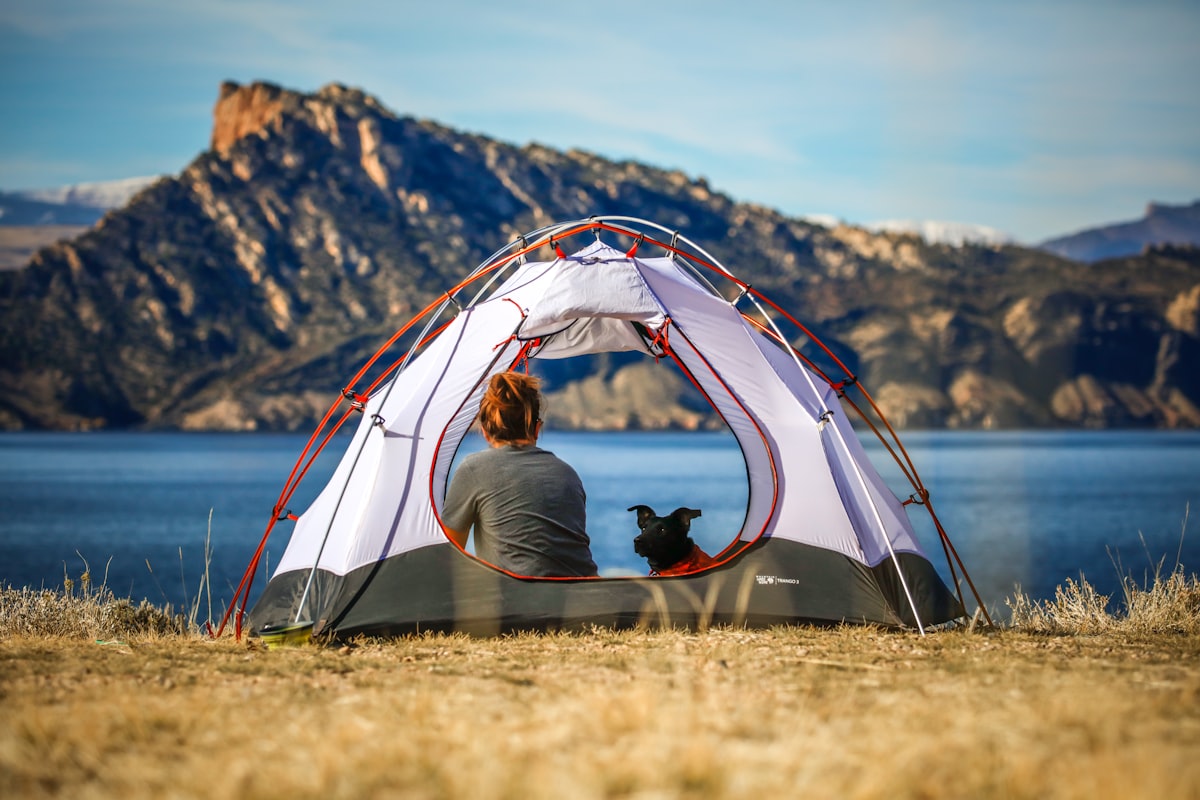
Image source: Unsplash (Free to use)
Solo Camping for Two with Dogs: Complete Trail Dog Guide
Our dog's first camping trip lasted eleven hours. We drove two hours out, hiked ninety minutes in, set up camp, and then spent the evening watching a very anxious 22 kg border collie mix refuse to settle, bark at every sound in the dark, and eventually work himself into such a state that we packed up and hiked out by headlamp at 10 p.m.
Three years later he sleeps through thunderstorms in a hammock-adjacent tent vestibule and is the best hiking partner either of us has. The gap between those two versions was not luck. It was preparation, and specifically preparation we had skipped entirely.
If you camp as a duo and want to bring a dog, this guide covers what actually matters—from the honest question of whether your dog should come at all, through gear, training, and the situations that go wrong.
Should Your Dog Come? An Honest Assessment
Not every dog belongs in the backcountry, and pretending otherwise is unfair to the dog.
Good Candidates
- Age 1 to 8 years. Puppies have developing joints and should not carry packs or do long distances. Senior dogs may struggle with temperature regulation and terrain.
- Reliable recall. If your dog does not come back when called, every off-leash moment is a risk to the dog and to wildlife.
- Settles in new environments. A dog that cannot relax anywhere but home will have a miserable night, and so will you.
- Reasonable fitness. A dog that walks 20 minutes a day is not ready for a 15 km trail day. Build up over weeks.
- Neutral around strangers and other dogs. Trails and campgrounds mean encounters. A reactive dog makes those encounters everyone's problem.
Reconsider If
- Brachycephalic breeds (pugs, French bulldogs, boxers) — they overheat dangerously fast and cannot cool efficiently. Short, cool-weather trips only, if at all.
- Any dog with untreated anxiety or noise sensitivity. Wilderness is loud at night in unfamiliar ways.
- Dogs with joint problems, heart conditions, or on medication without an explicit vet green light.
- Very small breeds in areas with raptors, coyotes, or significant predator activity.
Ask your vet directly: is this dog fit for a multi-day trip with sustained walking and temperature swings? Get a real answer, not a polite one.
Where You Can Actually Go
This trips up more people than any gear question. Dog rules vary enormously.
- US National Parks are largely dog-hostile. Most prohibit dogs on trails and in the backcountry entirely, limiting them to roads, campgrounds, and parking areas. Yellowstone, Yosemite, Glacier, Grand Canyon—all heavily restricted.
- US National Forests and BLM land are generally dog-friendly, often allowing off-leash where under control. This is where we do almost all of our dog trips.
- State parks vary wildly, sometimes park by park. Check the specific park page, not the state's general policy.
- Wilderness areas usually allow dogs but may require leashes in high season.
Check the managing agency's current page before every trip. We have twice arrived somewhere to discover a seasonal restriction we did not know about. Now we screenshot the rules before we leave cell service.
Gear: What the Dog Needs
A dog adds roughly 1.5–3 kg of gear, split between the two of you (or carried by the dog).
Essential
- Well-fitted harness, not a collar, for any trail use. Harnesses distribute pull and are far safer if you need to lift the dog over an obstacle.
- Two leashes: a 1.8 m standard lead and a longer 5 m line for camp. Never retractable—they fail, tangle, and give no real control.
- Collapsible bowl and a dedicated water bottle for the dog. Dogs drink roughly 60–100 ml per kg of body weight per day, more when working hard.
- Food in a sealed bag, 25–50% more than the dog's normal ration. Trail days burn serious calories. Bring the food the dog already eats—a trip is a terrible time to change diet.
- Sleeping pad or foam mat. Dogs lose heat to the ground exactly like people do. A closed-cell foam pad cut to size works fine.
- Waste bags and a plan to pack out or properly bury waste 15+ cm deep, 60 m from water. Dog waste is not the same as wildlife waste; it carries pathogens and disrupts local ecology. Pack it out where required.
- Reflective or LED collar light. Finding a dark-coated dog at night is genuinely difficult.
- Current ID tags and microchip registration. Verify the microchip contact details are up to date before you go.
Strongly Recommended
- Dog boots for sharp rock, hot sand, ice, or after a paw injury. Introduce them at home first—most dogs need a week to accept them.
- Dog-specific first aid additions: vet wrap, tweezers or a tick tool, styptic powder, saline for eye and wound flushing, and a spare sock plus tape as an emergency paw bandage.
- Insulating jacket for short-coated dogs in cold weather.
- A towel. Wet dog plus tent equals a bad night.
If the Dog Carries a Pack
A fit adult dog can carry 10–15% of its body weight, no more, and only after weeks of conditioning with progressively heavier loads. Load must be balanced side to side. Put the dog's food and its own bowl in there—not your tent poles. Never load a dog under 18 months.
Training Before You Go
This is the part we skipped and paid for.
Do These First
- Backyard tent night. Set the tent up at home. Let the dog investigate, feed meals inside it, then sleep in it. Twice, minimum. This single step would have saved our first trip.
- Practice "settle" on a mat. Teach the dog that a specific mat means lie down and relax. Bring that exact mat camping. Portable normality is enormously calming.
- Bombproof recall. Practice in progressively more distracting environments. If recall fails around a squirrel in a park, it will fail around a deer on a trail.
- Desensitize to camp noises. Rustling tent fabric, zippers, headlamps, crinkling food bags.
- A car-camping trial run. One night, close to home, vehicle available. If it goes badly you drive home instead of hiking out in the dark.
- Build distance gradually. Add roughly 20% to your longest walk each week. Watch for stiffness the next morning—that is your signal you went too far.
Camp Logistics for Two People and a Dog
The Sleeping Question
Three workable arrangements:
- Dog inside the tent. Warmest, safest, most secure. Requires a tent one size larger than you would otherwise buy—a 3-person tent for two people and a medium dog. This is what we do.
- Dog in the vestibule on its own pad, tethered. Works for dogs that run hot or are not fully house-trained. Less warm, and you will hear every movement.
- Dog tethered outside near the tent. Only appropriate in mild weather, low-predator areas, with a calm dog. We do not do this; we have seen coyotes work a campsite perimeter.
Never leave a dog tethered and unattended. Tethers tangle, and a tethered dog cannot escape a threat.
The Division of Labour
With two people, assign roles explicitly:
- One person handles the dog during setup, walking it and letting it decompress. The other pitches shelters. Trying to do both means a tangled dog and a badly pitched tent.
- Agree who is responsible for the dog at night. Somebody needs to be the one who gets up at 2 a.m. Rotate.
- Both people must know the dog's emergency plan — nearest vet, nearest trailhead, the dog's weight for medication dosing, any conditions.
Camp Rules That Prevent Problems
- Leash on whenever anyone unfamiliar approaches, without exception. Your recall is not the issue; their comfort is.
- Feed the dog well away from your own cooking area and store dog food exactly like human food — in a canister or hung. Dog kibble is bear bait.
- Never leave dog food out overnight.
- Keep the dog out of water sources you or others may drink from.
- Quiet hours apply to dogs. A barking dog in a campground at 6 a.m. is why so many places ban them.
The Real Risks
Paws
Check all four paws every single evening, between the toes and the pads. Look for cuts, cracks, embedded thorns, and grass seeds. Rock and hot sand cause more trip-ending injuries than anything else. If a pad tears, you are carrying the dog out — factor that into your route planning.
Overheating
Dogs cool by panting, which is far less efficient than sweating. Signs of trouble: frantic panting, thick drooling, bright red gums, staggering, vomiting. Act immediately — shade, cool (not ice) water on the belly, groin, and paws, and stop moving. Heatstroke in dogs kills fast. Hike in early morning and evening in warm weather.
Wildlife
- Porcupines and skunks are the most common actual encounters, and both end trips.
- Ticks — check thoroughly every evening. Use a vet-approved preventative.
- Snakes — dogs investigate with their faces. Know where the nearest vet with antivenom is before you go.
- Bears and large predators — a loose dog can chase wildlife and then lead it directly back to you. This is a documented cause of bear encounters. Leash in predator country.
- Giardia and leptospirosis from standing water. Discourage drinking from stagnant sources; offer clean water frequently so the dog has no reason to.
Getting Lost
Dogs bolt — from thunder, from gunshots, from deer. A lost dog in wilderness is a genuine emergency. Reflective collar, current tags, a GPS tracker if you can, and a recent photo on both phones.
Leave No Trace with a Dog
Dogs have real ecological impact, and responsible handling is part of the deal:
- Pack out waste on trails and near water. Bury only where explicitly permitted, 15 cm deep, 60 m from water.
- Keep dogs on trail. Off-trail dogs trample vegetation and widen paths.
- Never allow chasing wildlife. It stresses animals during critical feeding and nesting periods, and it is illegal in many areas.
- Respect other campers. Many people are afraid of dogs, and some are allergic. Assume nothing.
Wrapping Up
Camping with a dog as a two-person team is genuinely different from camping alone together. Your pace slows. Your route options narrow. Your gear list grows. Someone is always half-watching the dog.
What you get in return is hard to quantify. Our dog notices things we would walk straight past. He makes camp feel occupied and safe. He is the reason we have taken the slow route more than once and been glad we did.
Do the backyard tent night. Do the car-camping trial. Check the dog's paws every evening. Get those three right and most of the rest works itself out.