Solo Camping for Two Gear Repair: Field Fixes That Work
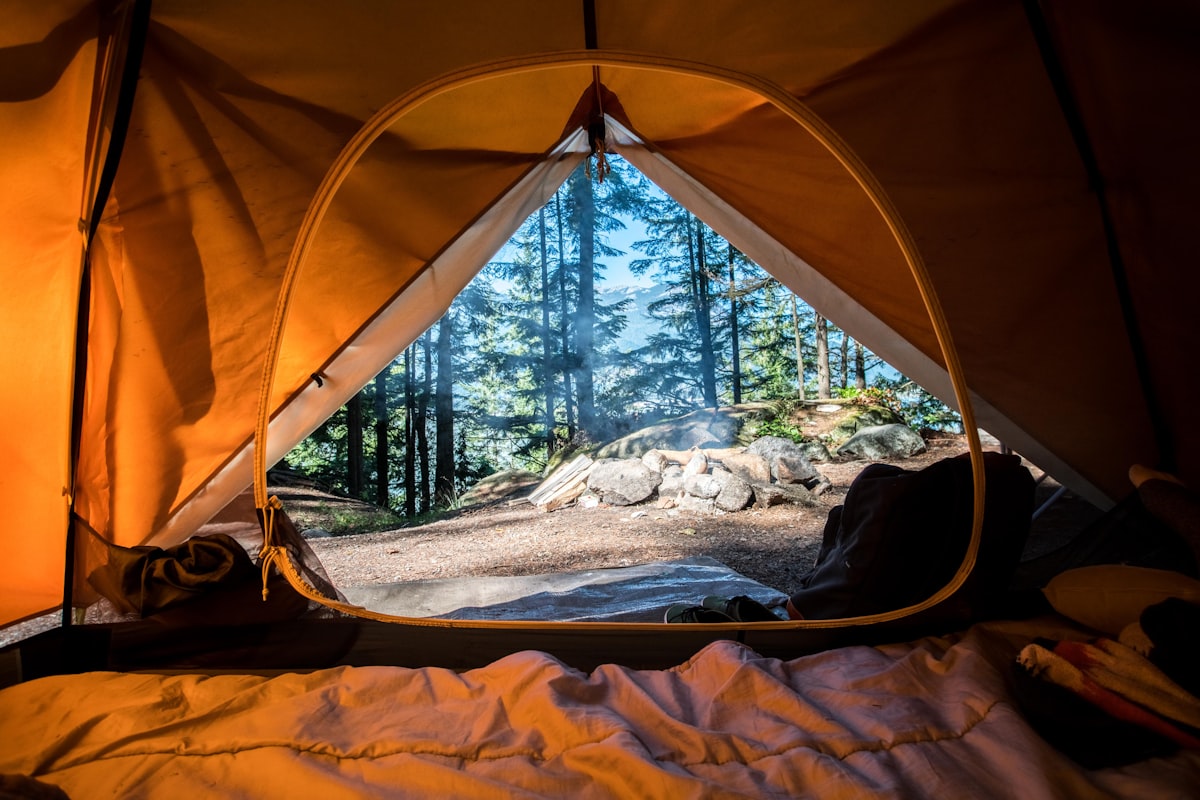
Image source: Unsplash (Free to use)
Solo Camping for Two Gear Repair: Field Fixes That Work
A tent pole snapped on the second night of a four-night trip. Clean break, mid-section, in wind, at 11 p.m. We had between us: a roll of duct tape wrapped around a water bottle, a multitool, and about six inches of spare cord. We splinted the pole with a tent stake and most of the tape, guyed the sail-shaped side down hard, and it held for two more nights.
That fix worked because of one item — the tape — that had been on the packing list for years without ever being used. Since then I have thought about repair kits differently. They are cheap, they weigh almost nothing, and the ratio of "grams carried" to "trips saved" is better than any other category of gear.
For two people camping in the solo style, one good shared repair kit is the right approach. Here is what goes in it and what to actually do when things break.
The Shared Repair Kit
One kit, carried by one person, weighing roughly 200–350 g. This is the item where two mediocre kits are worse than one good one.
The Core Eight
- Duct tape or Tenacious Tape, 2–3 m. Wrap it around a water bottle or a trekking pole to save space. Tenacious Tape is better for fabric — it is flexible, waterproof, and permanent. Duct tape is better for everything else. Bring both if you can.
- A pole splint (a short aluminium sleeve). Most tents ship with one. Find it, and put it in the kit rather than leaving it in the box at home. This is the difference between a five-minute fix and an hour of improvisation.
- Sleeping pad patch kit. The manufacturer's kit, plus a small tube of seam grip or urethane adhesive.
- 2 m of 2 mm accessory cord, plus 3 m of thinner cord. Guy lines, replacement pulls, lashings, bear hangs, boot laces.
- Needle and heavy thread — dental floss or waxed thread. A curved needle is easier to use on assembled gear.
- Safety pins and a few zip ties, various sizes. The most underrated items on the list.
- A multitool with pliers. Pliers are what you actually need for stove parts, stuck zippers, and bent stakes. A knife alone is not enough.
- Spare parts specific to your kit — a buckle, a spare pad valve, stove O-rings and a jet cleaning needle, a spare headlamp battery.
Worth Adding
- A 15 cm square of ripstop nylon for patching larger holes
- Seam sealer, a small tube
- Superglue, a single small tube. Bonds many things and closes small skin splits.
- Two spare tent stakes. Bent and lost stakes are the most common minor failure.
- A few metres of tape wrapped on a trekking pole as backup to the main roll
- A short strip of aluminium (a flattened section of a drink can works) for splinting and shimming
Field Fixes, Problem by Problem
Torn Tent Fabric
Clean and dry the area as best you can — this determines whether the patch holds. Apply Tenacious Tape to both sides of the tear, with rounded corners on the patch. Square corners peel; rounded corners stay put. Overlap the tear by at least 2 cm all round.
For a large tear, sew a rough running stitch first to take the load, then tape over the stitching to seal it. Do not rely on stitching alone for waterproofness.
Duct tape works in a pinch but leaves residue and fails in sustained rain. Use it if it is what you have, and plan a proper repair at home.
Broken Tent Pole
This is the one that nearly ended our trip.
- With a splint: slide the sleeve over the break, centred, and wrap tightly with tape at both ends. This is close to a full-strength repair.
- Without a splint: a tent stake, a stick, or a strip of aluminium alongside the break, wrapped hard with tape. Weaker, but functional.
- Then reduce the load. Guy that section of the tent out much harder than usual so the pole carries less stress, and pitch the repaired side away from the wind.
- Shock cord snapped inside the pole? The pole still works — the cord only helps assembly. Keep the sections in order and pitch normally.
Punctured Sleeping Pad
Find the leak first. Inflate hard and listen. If you cannot hear it, run soapy water over the surface and look for bubbles — or in a stream, submerge sections and watch. Mark the hole immediately with a pen or a piece of tape; punctures are notoriously hard to find twice.
Deflate, clean and dry the area thoroughly, then apply the patch with firm pressure and leave it as long as possible before inflating — ideally overnight, with something weighting it down. Rushing the cure is why patches fail.
Valve leaking rather than fabric? Often just grit. Open, rinse, reseat. Carry a spare valve if your pad allows it.
No patch kit and a leaking pad? Fold the pad so the puncture is in a section you can isolate, stuff spare clothing under your hips and shoulders, and accept a rough night. Insulation under your torso matters far more than under your legs.
Failed Zipper
Zipper failures are almost never broken teeth. Usually the slider has worn open and no longer closes the teeth behind it.
- Fix: gently squeeze the slider narrower with pliers — a small amount, evenly on both sides, then test. Repeat in tiny increments. Over-squeezing jams it permanently.
- Teeth not meshing at one point: check for a bent tooth and straighten it with pliers.
- Slider off the track entirely: feed it back on from the bottom stop, one side at a time.
- Zipper irreparable: safety pins. A row of safety pins closes a tent door or a sleeping bag adequately for the rest of a trip. This is what the safety pins are for.
- Preventive: zippers fail mostly from grit. Brush sand out of tent zippers daily and never force a stuck slider.
Boot or Shoe Failure
The most trip-ending failure, because you cannot walk out without footwear.
- Delaminated sole: wrap the entire boot circumferentially with duct tape or cord. Ugly, effective, and will get you out. Superglue plus tape is better if you have time to let it set.
- Blown seam: stitch with heavy thread, then tape over.
- Broken lace: replace with accessory cord.
- Torn insole or hot spot: tape the inside of the boot smooth. Do not tape the foot.
- Before a long trip, check the sole-to-upper bond by flexing hard. Old boots delaminate suddenly, often on a first trip after long storage.
Stove Not Working
Work through it in order rather than assuming the worst:
- Canister stoves: is the canister cold? Cold canisters lose pressure dramatically. Warm it in your hands or inside a jacket — never over a flame.
- Is it actually empty? Float it in water; a nearly empty canister floats high.
- Blocked jet? Clean with the needle from your kit or a single fine wire strand.
- O-ring perished or missing? This is the most common hard failure. A spare O-ring weighs nothing.
- Liquid fuel stoves: pump cup dry? A drop of oil restores it. Fuel line blocked? Clean it.
- Nothing works: this is why you plan at least one no-cook meal per trip. Cold soaking works — pasta, couscous, or instant noodles left in water for 30–60 minutes are perfectly edible.
Backpack Failure
- Snapped hip belt buckle: this is why you carry a spare buckle. Failing that, lash the belt with cord.
- Torn shoulder strap: stitch heavily, then tape. Reduce load and redistribute weight upward.
- Blown seam in the pack body: stitch, or use safety pins to hold the load and tape over.
- Broken frame stay: splint with a tent stake and tape, same principle as a tent pole.
- Zipper on the main compartment failed: safety pins, plus cord lacing through the fabric if needed.
Water Filter Clogged
Backflush according to the manufacturer's method — most filters have one and most people have never read it. If flow does not recover, switch to your backup. This is exactly why each person carries their own filter and why purification tablets are in the shared kit. Never drink untreated water because your filter failed; the consequences last far longer than the trip.
How Two People Should Handle Repairs
- One person owns the kit and knows what is in it. Rotate between trips so both stay familiar.
- Both people should know the location of the kit in the other's pack. If one person is injured, the other needs to find it fast.
- Practise the two fixes that matter at home: splint a pole and patch a pad. Doing either for the first time in the dark, in wind, is much harder than it needs to be.
- Redundancy covers the rest. Two shelters, two sleep systems, two filters means most single failures are inconvenient rather than trip-ending. That is the whole logic of the solo-style duo setup.
- Decide together whether a repair is good enough to continue. A taped pole holding in calm weather is fine. The same pole with a storm forecast is a reason to walk out. Two opinions is an advantage here — use it.
Prevention Beats Repair
Most field repairs trace back to something skippable at home.
- Set up new gear before the trip. Every time. Find the missing pole section in your living room, not at a trailhead.
- Inspect before packing: guy lines, stake bag, zippers, boot soles, stove O-rings, pad valve.
- Store gear properly. Bags stored compressed lose loft. Tents stored damp grow mildew that weakens fabric and coatings. Elastic perishes.
- Keep zippers clean. Grit is the enemy.
- Reproof and reseal annually. Waterproof coatings degrade; a can of DWR spray extends a jacket's life by years.
- Replace what is worn before it fails. Frayed guy lines and cracked stove O-rings give warning. Listen to it.
Wrapping Up
Our snapped pole cost us about forty minutes and half a roll of tape. Without the tape it would have cost us two nights and a long walk out.
Carry one shared kit with the core eight items. Learn two fixes properly — pole splint and pad patch. Set up new gear at home before you trust it. And rely on the redundancy that comes free with two self-sufficient campers: the best repair for a failed item is often the other person's spare.
Tape is 30 grams. Bring it every time.